















A few years ago, a friend of mine spent three weeks in Umbria on a work trip and came home saying almost nothing about the Renaissance art or the food. What she couldn’t stop talking about was a conversation she’d had with a shop owner in Assisi — fumbling through a few phrases of broken Italian, laughing at her own mistakes, and somehow ending up invited to a family lunch the next day. She’d been to Italy twice before on package tours and never had a moment like that. The only thing different this time was the handful of Italian words she’d bothered to learn.
That’s the real argument for learning Italian before your next trip. Not fluency, not a certificate, not bragging rights – just enough to turn a trip from something you watch into something you’re actually part of. Here’s the case for it, with the numbers to back it up.
Italy Is Busier Than Ever – Which Makes Language a Bigger Advantage, Not a Smaller One
Italy recorded roughly 185 million tourist arrivals in 2025, a 7.1 percent jump from the year before, with foreign arrivals alone topping 104 million. Rome, Venice, and Florence are absorbing so much of that traffic that overtourism has become an official policy concern, with entry fees, visitor caps, and crowd-control measures now standard in the historic centers. If your image of an Italian vacation is a quiet café and a warm welcome, the classic postcard cities are, increasingly, not where you’ll find it.
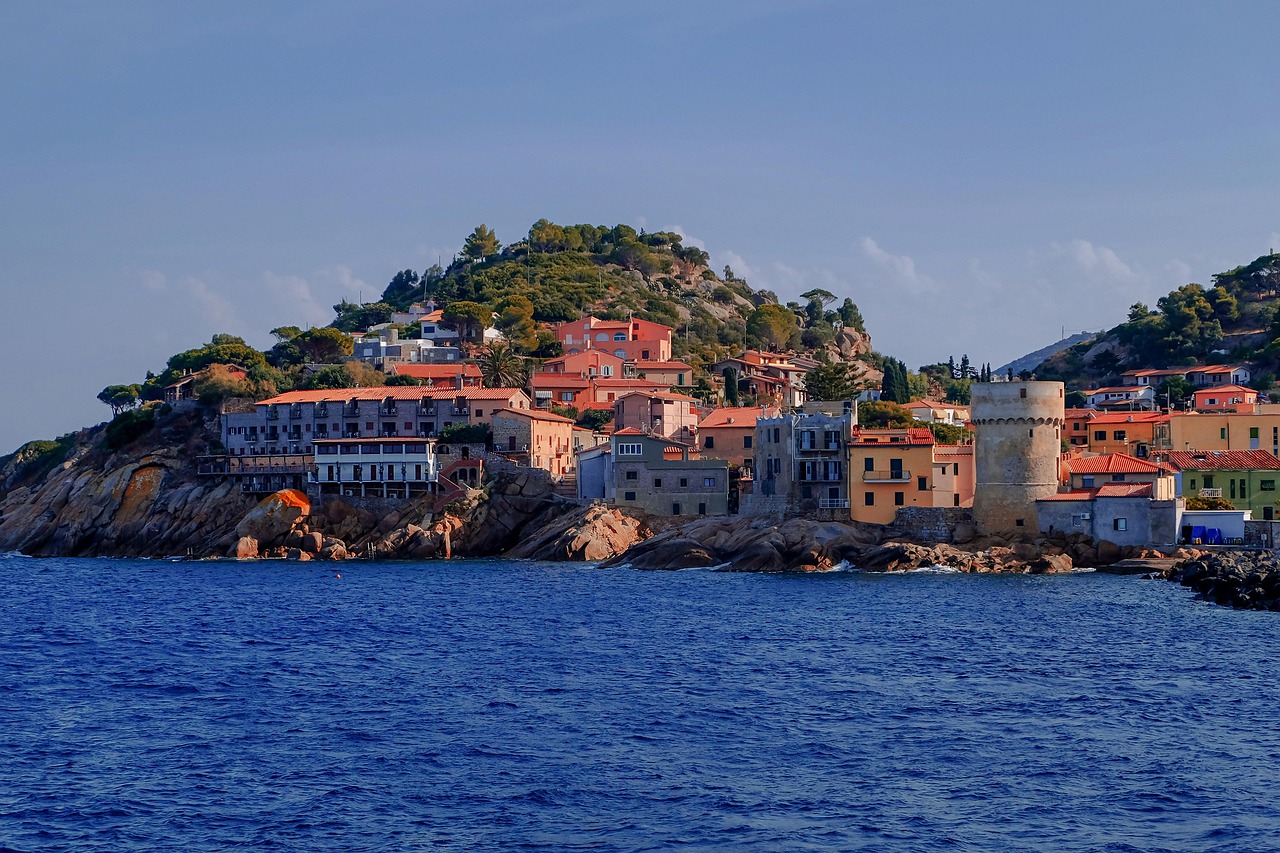
What’s happening instead is a shift toward the regions that haven’t been discovered yet — travel analysts have specifically flagged areas like Puglia and Le Marche as the beneficiaries of tourists spreading out beyond the big three cities. And here’s the catch: those secondary regions have far less English signage, fewer English-speaking staff, and none of the tourist infrastructure built up around Rome’s Colosseum queues. A few words of Italian go a lot further in a hill town in Le Marche than they do at the Trevi Fountain, precisely because fewer visitors bother to learn them there.
The Gap Between a Trip You Watch and a Trip You’re Part Of
None of this requires fluency. Research on tourist-local interactions consistently shows that even basic, survival-level proficiency — ordering food, asking directions, handling small transactions — measurably changes how locals respond to visitors, because the effort itself signals respect rather than the assumption that everyone should accommodate English.
In practice, that plays out in small but real ways. Restaurant staff hand you the Italian menu instead of steering you toward the laminated tourist one with the photos. Train station clerks explain the actual fastest regional connection instead of just pointing you toward the obvious express line. Shop owners in towns with no English signage at all treat you like a guest passing through their town rather than a transaction to process quickly. None of that shows up in a guidebook, and none of it is available to someone relying entirely on a translation app held up to a stranger’s face.
Italian Is One of the Easiest Languages for a Traveler to Pick Up Fast
The U.S. Foreign Service Institute, which trains American diplomats headed abroad, ranks world languages by how long it typically takes an English speaker to reach working proficiency. Italian sits in Category I, the easiest tier alongside Spanish, French, and Portuguese, requiring roughly 600 to 750 hours of study for full professional fluency — compare that to over 2,200 hours for a language like Mandarin or Arabic. But you don’t need anywhere close to that to travel well.
Italian pronunciation is almost entirely phonetic: once you learn the rules, you can read a menu, a road sign, or a train departure board out loud and say it correctly on the first try, which is not something you can count on with English or French. Combined with the huge number of cognates Italian shares with English through Latin and French roots — words like “informazione,” “ristorante,” and “stazione” are recognizable before you’ve studied a single lesson — a traveler with even 20 to 30 hours of focused prep before a trip can typically handle restaurants, transport, directions, and basic small talk with real confidence.
Where Language Actually Changes the Trip: Food and Markets
Italy’s food and wine culture is regional to an extreme most visitors never fully see, because so much of it is explained verbally, by the person standing behind the counter, not printed anywhere. A vendor at a mercato in Bologna or Palermo will happily talk your ear off about where a cheese came from, how a cured meat was aged, or which local wine pairs with what’s in season — but only if you can follow along past the first sentence.
This matters even more in Italy’s wine regions, where DOP and DOC labeling systems encode strict rules about origin and production that most tourists never learn to read. Sommeliers and wine tourists who’ve studied even conversational Italian consistently describe a different kind of access at small, family-run wineries — not the polished English tour, but the real conversation about the vintage, poured by someone who relaxes visibly the moment you stop relying on hand gestures.
The same goes for cooking classes and food tours, which are booming across Puglia, Sicily, and Tuscany as travelers look for hands-on experiences instead of another museum line. Instructors teaching in their second language tend to simplify what they say; instructors who can speak freely tend to teach more, tell more stories, and go further off script — and the only way to get the second version is to meet them partway.
Where a Little Italian Goes the Furthest
Not every region rewards language effort equally. In Venice or central Rome, where staff deal with English-speaking tourists dozens of times a day, a few Italian phrases are appreciated but won’t necessarily change your experience much — the system there is built around English by default. The payoff is bigger in exactly the places travel writers keep pointing people toward for 2026: the Puglia coastline south of Bari, the hill towns of Le Marche, inland Sicily beyond Palermo and Taormina, and the smaller Cinque Terre villages outside peak summer months. These are places where tourism is growing fast but the English-speaking infrastructure hasn’t caught up yet, which is exactly the gap a traveler with basic Italian can step into.
It also matters at the calendar level. Local festivals — a sagra celebrating a regional dish, a patron saint’s feast day, a harvest celebration in wine country — draw almost entirely Italian-speaking crowds, because they’re not built for tourists in the first place. Showing up to one of these with even simple conversational Italian is the difference between watching from the edge of the piazza and actually being pulled into the celebration, offered a plate of something, or invited to sit down. These events rarely appear in English-language travel guides at all, which means the only way most travelers hear about them is by talking to someone local — in Italian.
It Also Makes You Safer and More Independent
Beyond charm, there’s a practical safety argument. Being able to read a sign, understand an announcement, or explain a problem to a pharmacist, doctor, or police officer matters more than most travelers think about until they need it. Italy’s train system, in particular, relies heavily on platform changes and delay announcements that are not always translated, especially on regional lines connecting smaller towns — the same routes now seeing the fastest growth in visitors as tourism spreads beyond the big cities. Travelers who can follow along move through disruptions calmly instead of anxiously; those who can’t often end up depending on strangers or missing connections altogether.
Three Myths That Keep Travelers From Bothering
“I don’t have time before my trip.” Most people overestimate how much Italian they need and underestimate how fast travel-specific vocabulary sticks. You don’t need grammar drills to order coffee or ask where the bathroom is — you need a few weeks of focused, high-frequency phrases, which is a very different and much smaller task than “learning a language.”
“Everyone in Italy speaks English anyway.” In major cities, often true. In the secondary regions now absorbing more and more of Italy’s tourist growth — exactly where the more interesting, less crowded experiences are — it’s far less reliable, and the gap is exactly where a little Italian earns you the most goodwill.
“An app on my phone is enough.” Translation apps are useful for emergencies, not for conversation. Holding up a phone screen to a market vendor or a nonna running a family trattoria ends the interaction it was supposed to start. Even a small amount of real, spoken Italian keeps you in the conversation instead of outside it, watching it happen through a translated screen.
How Much You Actually Need Before You Go
You don’t need six months. Most travelers preparing for a two- or three-week trip get real, usable results from 20 to 30 minutes a day for six to eight weeks beforehand, focused on speaking and listening rather than passive vocabulary lists — restaurant phrases, transport vocabulary, greetings, numbers, and a handful of polite exchanges cover an enormous share of real travel situations. The travelers who get the most out of this tend to start with real spoken practice early rather than waiting until they “feel ready,” since waiting is usually just another way of not starting.
If you’re planning an Italy trip and want a place to start, or you’ve tried before and stalled out, Larry Aiello’s site is a genuinely useful next step — built by someone who has spent years living between Italian-American identity and real time on the ground in Italy, not just theorizing about the language from the outside.
A Short List of Phrases That Cover More Than You’d Expect
You don’t need a phrasebook’s worth of material before a trip — a small, well-chosen set of phrases covers a surprising share of real situations: greetings and polite forms of address, numbers for prices and times, directions and transport vocabulary, restaurant ordering and dietary needs, and a few flexible “help me understand” phrases like “può ripetere, per favore” (“can you repeat that, please”) that let a conversation continue instead of stalling out. Travelers who build fluency around these five categories, rather than trying to learn Italian broadly, tend to feel travel-ready far faster than they expect.
The Bottom Line
Italy welcomed more foreign visitors last year than almost any point in its history, and that crowd is only going to make the well-worn tourist trail more crowded and more scripted. The travelers getting the version of Italy worth writing home about are increasingly the ones willing to step slightly off that trail — and language is the fastest, cheapest way to do it. You don’t need fluency. You need enough to order in the local dialect of confidence rather than apology, and to let a shopkeeper, a vendor, or a nonna decide you’re worth talking to. Everything else about the trip tends to follow from there.
Larry Aiello is an Italian-American who loves to travel and share his knowledge with others about Italy. Visit his blog where you can learn to speak Italian.