














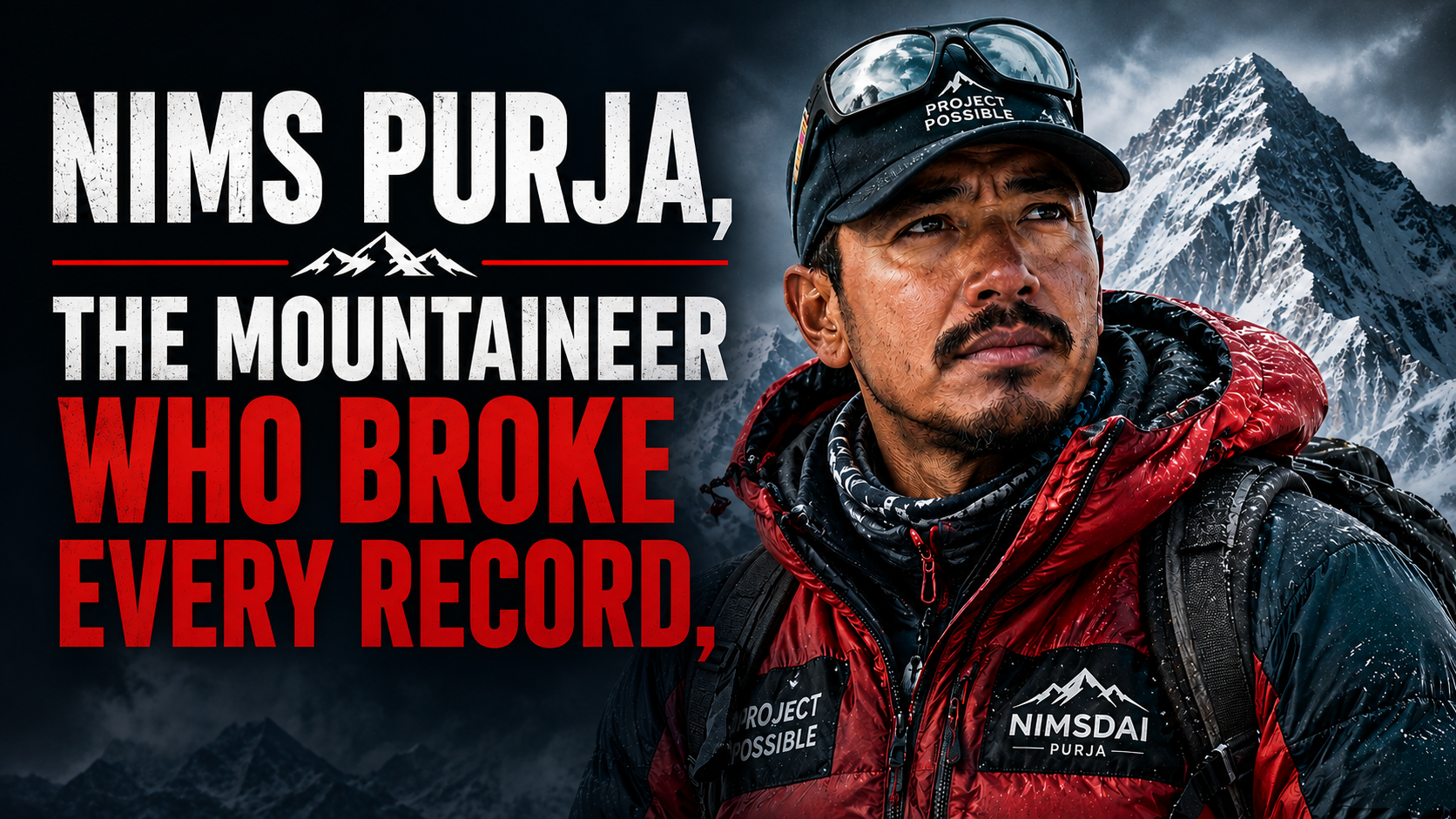
Nirmal “Nims” Purja, the Nepali climber who changed what people thought was possible in the mountains, died in an avalanche on Broad Peak in Pakistan. He was 43. And honestly, for a lot of people who follow climbing, this news still don’t feel real.
What Happened Up There
Purja was leading a team on Broad Peak, the world’s 12th tallest mountain at 8,047 metres, in Pakistan‘s Karakoram range, when the avalanche hit. It was Thursday, July 30, and the slide took the whole expedition group down with it, ten climbers in total, Purja among them.
Bad weather made the rescue hard for days after. Teams could barely get up the mountain to look. Eventually rescuers found Purja’s body, though getting it back down to base camp took even longer, the conditions were just too dangerous. His remains got flown off the mountain about a week later, on August 6, along with a few of the other climbers who died with him.
Some of those other climbers were Chinese mountaineer Zhong Wang, and Nepali climbers Nima Sherpa, Gyalu Sherpa, and Kilu Sherpa. Two more of Purja’s own guides and close climbing partners, Pur Bahadur Gurung, who everyone called Yukta, and another man also named Nima Sherpa, died with him too.
Back home in Nepal, this hit hard. The Prime Minister, Balendra Shah, confirmed the deaths himself in a post online. Students and mourners lit candles at a school in Chitwan, just to say goodbye in their own way.
So, Who Was Nims Purja, Really?
Nims was born in Nepal, in a small village, not the kind of place you’d guess a future record breaker would come from. He wasn’t Sherpa either, which matters more than people realize, he came from the Magar community, a group that don’t usually get the spotlight in climbing.
He joined the British army when he was young, first with the Gurkhas, then later he pushed his way into Britain’s Special Boat Service, one of the hardest units to get into anywhere. He worked there as a cold weather specialist, until around 2018, when he decided to leave it all behind and chase the mountains full time instead.
That decision changed everything. In 2019, he did something nobody thought a person could do, he climbed all 14 of the world’s 8,000 metre peaks in just six months and six days. The old record for that was over seven years. Six months. People in the climbing world still talk about it like it’s some kind of myth, except it actually happened.
He called it “Project Possible,” which kind of says everything about how he thought. Nims used to say things like, the biggest strength he had was having no fear at all. Whether that’s exactly true or just how he saw himself, either way, it fit him.
Netflix made a documentary about the whole thing in 2021, called 14 Peaks: Nothing Is Impossible, and it’s what a lot of people outside the climbing world first knew him from. He also wrote a book, Beyond Possible, that did pretty well too.
But he didn’t stop after 2019. Nims went back and climbed all 14 of those same peaks again, this time without using extra oxygen, which is a whole different level of hard. He was actually trying to be the first person ever to do that double, all 14 peaks twice, no oxygen either time, when he died on Broad Peak.
In 2022 he started something called the Nimsdai Foundation, and he also ran his own guiding company, helping regular climbers, not just elite ones, get up mountains like Everest safely. A lot of his work these last few years was less about his own records and more about helping other people chase theirs.
His brother Kamal spoke for the family after the news broke. He said it was the heaviest thing he ever had to share, losing his younger brother like that, but that the family stayed proud of him anyway, and that his legacy gonna live on.
Why This Matters Past the Climbing World
Nims wasn’t just another name on a record list. He was one of the few really famous high altitude climbers who wasn’t Sherpa, and that alone got people talking more about who actually does the hardest, most dangerous work on these mountains, and who gets paid fair for it, and who gets the credit after.
For most people, they’ll never climb an 8,000 metre peak in their life, obviously. But Nims is still a big part of why places like Everest and the trails around it got so much attention these past few years. A lot of the interest now in something like the Everest Base Camp Trek can be traced back, at least a little, to climbers like him putting the region on people’s radar in the first place.
Not the First Loss This Year
Nims dying is part of a rough year for high altitude climbing overall. The Karakoram range, where Broad Peak sits, is known for weather that turns bad fast, even during the summer climbing window. Pakistan’s Alpine Club said this rescue was one of the toughest they ever had to run.
Losing ten climbers in one single event, with someone as experienced as Nims among them, is making a lot of people in the industry ask harder questions now, about how much risk is too much risk, even when the guide leading you up is one of the best in the world.