






















I’d been climbing for around eight months before I properly tried climbing outdoors.
Most of that time had been spent at a university climbing club, where everything felt fairly controlled. Routes were clearly marked, holds were brightly coloured, the mats were enormous and if you got stuck you could usually stand back and work out exactly where you were supposed to go.
Then I climbed outside.
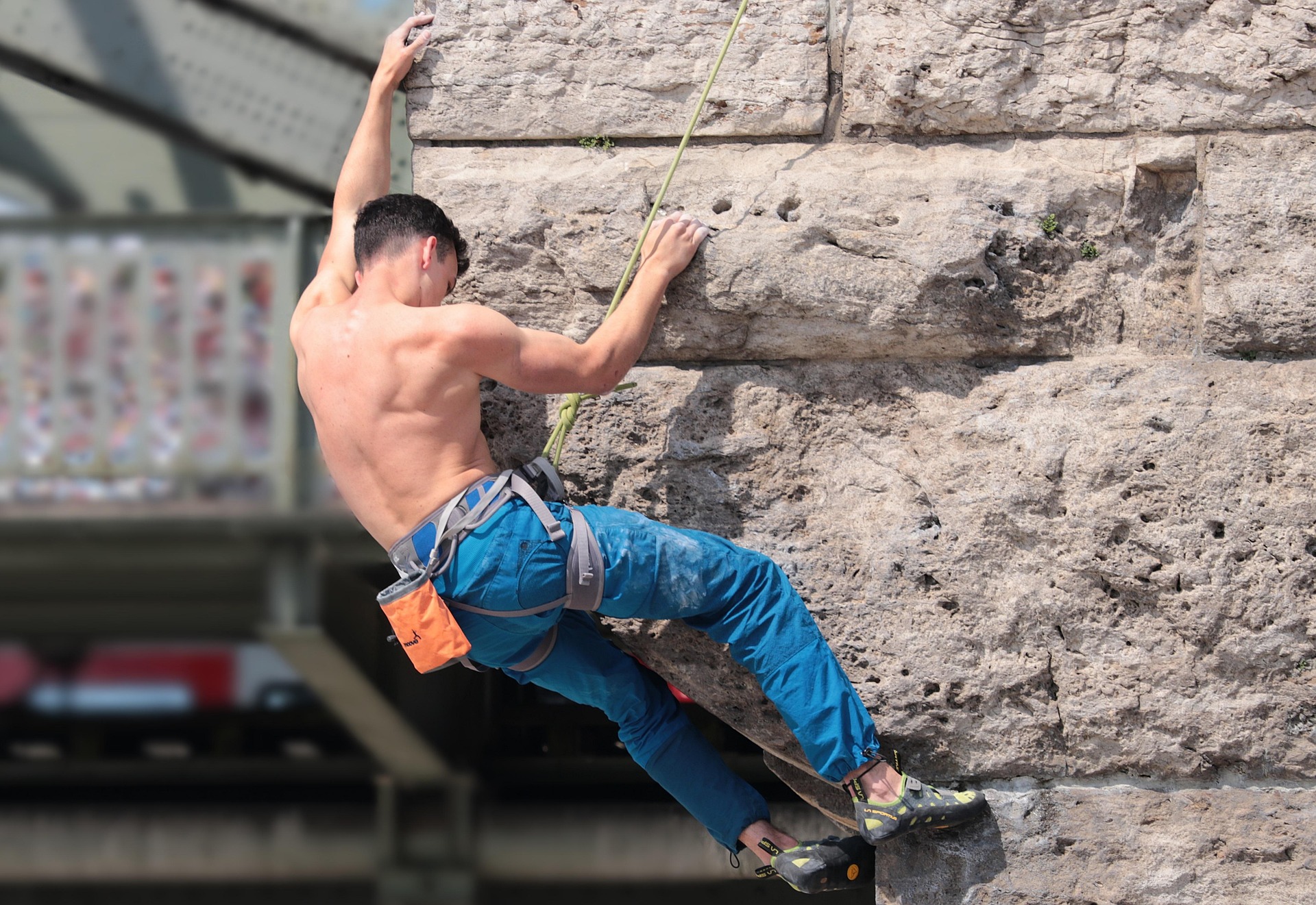
It was immediately obvious that indoor climbing had taught me how to move, but it hadn’t completely prepared me for climbing on actual rock.
My first outdoor route was supposedly around V0. It was low enough that we weren’t using a bouldering mat, so it was closer to a very easy low-level solo than anything particularly serious.
On paper, it should have been easy.
It didn’t feel easy.
If somebody had told me it was V2, I probably would have believed them.
That first experience taught me something I’ve noticed repeatedly since: indoor grades and outdoor grades might use the same numbers, but the climbing can feel completely different.
Where Are the Holds?
This was probably the biggest shock.
At a climbing wall you walk up to a problem and immediately know roughly what you are dealing with. The blue holds belong to the blue route. The yellow holds belong to the yellow route.
You might not know the sequence, but you know where the holds are.
Outside, there are no coloured blobs telling you what to grab.
At first, you look at the rock and see… rock.
You have to start recognising tiny edges, cracks, slopes and changes in texture that you would probably walk straight past if you weren’t looking for them.
The same applies to your feet.
Indoors, footholds tend to be obvious. Outside, you can find yourself trying to balance on something that barely looks large enough to stand on.
I remember spending far more time searching for my next hand or foot position than actually climbing.
That was probably the first moment I understood why experienced outdoor climbers seem to spend so much time staring at a route before they leave the ground.
They aren’t just looking at it.
They’re reading it.
Outdoor Grades Feel Different
Climbing grades give you a rough indication of difficulty, but I learned fairly quickly not to treat them as absolute.
A V0 indoors might contain large positive holds and obvious movement.
A V0 outdoors might involve trusting your feet, using an awkward body position or holding onto something that barely feels like a hold at all.
Technically, the outdoor problem might not require huge strength.
But it may require skills you simply haven’t developed yet.
That means someone who climbs comfortably at V2 or V3 indoors can suddenly feel very ordinary on an easy outdoor problem.
And that’s fine.
Once you stop worrying about whether you ‘should’ be able to climb something because of the number attached to it, outdoor climbing becomes far more enjoyable.
The grade becomes information rather than a judgement.
It’s also one of the reasons I like the idea behind the V-grade designs at ClimbingTshirts.co.uk. Grades become part of climbing culture, but ultimately everyone has their own relationship with them. A grade can represent progression, frustration, a project or simply a level you enjoy climbing at.
Your Feet Suddenly Matter Much More
Indoor climbing obviously requires footwork, but outdoor climbing made me realise how lazy my feet could be.
On plastic holds, particularly easier problems, you can often get away with slightly inaccurate foot placement.
Rock is less forgiving.
You might only have a tiny edge to work with, and placing your foot a centimetre differently can completely change whether the move feels secure.
I also noticed that I was looking down far more often.
Instead of automatically putting my foot onto a large hold, I had to consciously decide exactly where I wanted the edge of my shoe to sit.
It slowed my climbing down considerably.
But that wasn’t necessarily a bad thing.
I started thinking more about balance and body position rather than simply trying to pull myself upwards.
The Mental Side Changes Too
There is something psychologically reassuring about an indoor climbing wall.
You know the environment has been designed for climbing.
There are thick mats underneath you. The holds have been bolted into place. Problems have been set deliberately.
Outside, even when the climbing is relatively easy, everything feels slightly less predictable.
The rock isn’t designed for you.
That makes you think more carefully.
Is that hold actually solid?
What happens if my foot slips?
Where would I land?
Even on very easy climbing, I found myself much more aware of my surroundings.
In some ways this made climbing harder.
In others, it made it more interesting.
You become much more involved in solving the entire problem rather than simply completing a sequence of moves.
Rock Has Character
Another thing I hadn’t really appreciated was how different rock can feel.
Indoor holds vary, of course, but they are still manufactured objects attached to a wall.
Outside, the surface itself becomes part of the problem.
Some areas can feel incredibly grippy. Others can be polished or slippery. Small cracks suddenly become useful. Tiny changes in angle can give you enough friction to stand somewhere that initially looked impossible.
You start noticing details in the rock that you simply wouldn’t notice otherwise.
That makes each problem feel more individual.
Two climbs with exactly the same grade can feel completely different depending on the rock type, location and style.
Indoor Climbing Still Prepared Me Well
Despite all these differences, I was glad I had started indoors.
Eight months of climbing at university had given me enough basic movement, strength and confidence to enjoy being outside rather than feeling completely overwhelmed.
Indoor walls are also incredibly convenient.
You can climb after work, train throughout winter and repeat the same move twenty times without worrying about rain.
For most people, they’re probably the easiest way into climbing.
But going outside added another dimension to it.
Suddenly the movement skills I’d been learning indoors had to be applied to something much less obvious.
The Best Part Was Starting Again
Strangely, one of the things I enjoyed most about outdoor climbing was feeling like a beginner again.
Indoor climbing can become very focused on progression.
V1 becomes V2. Then you want V3.
Outside, I stopped worrying quite so much about that.
An easy climb could still be interesting because I had to work out where the holds were, how to position my feet and how to move efficiently.
That first outdoor V0 taught me far more than I expected.
It certainly didn’t feel like a V0 at the time.
But that’s probably the point.
Climbing isn’t really about making every problem feel easy. Part of the enjoyment comes from encountering something unfamiliar, struggling with it for a while and slowly working out how to move through it.
And outdoors, even the easiest piece of rock can give you exactly that feeling.